
Advances in dental materials, laboratory techniques, and clinical protocols have made replacing missing teeth more predictable and natural-looking than ever. While dental implants and fixed bridgework provide excellent long-term options for many patients, removable dentures remain a reliable, time-tested solution for restoring a complete, functional smile.
At the office of Comprehensive Family Dentistry, we design and fabricate dentures using high-quality materials and careful attention to fit and appearance. The goal is to rebuild your smile in a way that supports comfortable chewing, clear speech, and facial balance while looking natural in everyday settings.
We approach denture care with a focus on individualized treatment. That means listening to your goals, evaluating oral health thoroughly, and recommending an option that suits your anatomy, routine, and overall health — not one-size-fits-all dentistry.
Losing teeth affects more than cosmetics. Gaps alter the way your bite works and how your jaw muscles perform, which can change your chewing efficiency and the types of food you find comfortable to eat. Over time, those functional shifts can influence nutrition, digestive comfort, and even energy levels.
There are also structural consequences. When teeth are absent, the bone that formerly supported them gradually remodels and resorbs. That loss of underlying support can change facial contours and make the lower third of the face appear sunken or narrower, especially when multiple teeth are missing.
Beyond function and form, missing teeth can influence social confidence and vocal patterns; gaps may change how certain sounds are formed. Replacing teeth with an appropriate prosthesis addresses practical needs while restoring the kind of appearance and self-assurance most patients want to reclaim.

Removable dentures are prosthetic appliances that sit on the soft tissues of the mouth and restore one or both dental arches. They consist of artificial teeth attached to a supportive base shaped to follow the contours of the gums and ridges. When properly designed, a denture can restore appearance, support the lips and cheeks, and return much of the lost chewing function.
Unlike fixed bridges or single-tooth implants, removable appliances can be taken out to clean, allowing direct care of the gums and any remaining natural teeth. This removability also makes dentures especially useful for patients who prefer or require non-permanent restorations for medical or lifestyle reasons.
Modern denture materials and refinements in shade, tooth form, and base characterization make it possible to achieve highly natural results. Properly seated dentures should be comfortable, stable during everyday tasks, and straightforward to maintain with consistent hygiene and periodic professional checkups.
Choosing the right denture begins with a careful clinical exam that looks at the number and quality of remaining teeth, gum health, ridge form, and jaw relationships. The best solution balances function, durability, and a look that suits your facial characteristics and personal preferences.
For a patient missing all teeth in an arch, a full (complete) denture restores the entire upper or lower dental arch. When several, but not all, teeth remain, a removable partial denture fills the spaces and helps stabilize the neighboring teeth to prevent drifting and bite changes.
In many cases, a hybrid strategy that uses attachments, implants, or other retention aids can be recommended to enhance comfort and stability. We’ll discuss the benefits and practical considerations of each approach so you can choose the option that fits your daily life.
Complete dentures replace all teeth in either the upper or lower jaw (or both). Their success depends on accurate impressions, correct relationships between the jaws, and careful selection of tooth form and placement to achieve natural-looking results and proper function.
Full-arch replacements can be delivered after tissues have healed from extractions, or in some situations, an immediate denture is placed at the time of tooth removal to avoid a period without teeth. Immediate solutions provide continuous esthetics but may require relines or adjustments as the mouth heals and tissues change shape.
Immediate Denture
An immediate denture is inserted the same day teeth are removed so the patient does not experience a gap in appearance. Because healing tissues remodel, these dentures often need subsequent adjustments or a definitive replacement once the ridge stabilizes.
Overdenture
An overdenture improves support and retention by fitting over selected natural tooth roots or root-treated teeth. Preserving these roots can slow bone loss and give the denture more predictable stability.
Implant-Supported Dentures
Implant-supported designs attach to a series of small implants placed in the jaw. When appropriate for a patient’s health and anatomy, this option can greatly increase retention and comfort compared with a conventional removable denture.
Partial dentures replace one or several missing teeth and are anchored to the adjacent natural teeth with clasps or precision attachments. They help restore chewing function, close gaps that could lead to drifting, and maintain the alignment of remaining teeth.
Today’s partials can be crafted from a variety of frameworks — from lightweight flexible resins to more rigid cast-metal bases — allowing a balance between strength, comfort, and aesthetics tailored to each mouth.
At the office of Comprehensive Family Dentistry, we evaluate tooth health, tissue stability, and personal goals to recommend a partial design that meets both functional needs and cosmetic expectations.
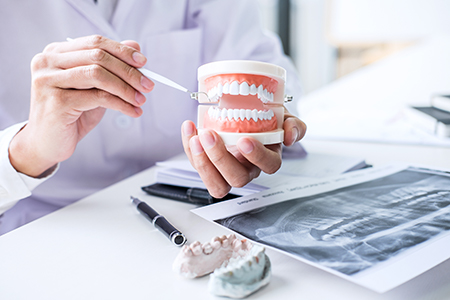
Crafting a comfortable, attractive denture is a multi-step process that blends clinical assessment, precise impressions, and detailed laboratory work. Our approach begins with a thorough medical and dental history, followed by diagnostic imaging as needed to evaluate bone contours and soft-tissue health.
Where extractions or tissue reshaping are required to optimize fit, those steps are coordinated and scheduled so the final prosthesis will sit predictably and comfortably. Careful communication with the dental lab about tooth position, color, and bite relationships helps ensure the finished denture performs well and looks natural.
We take time to explain every phase — from preliminary models and try-ins to the final insertion — so patients understand what to expect and how each step contributes to long-term comfort and function.

Adjusting to a new denture is a gradual process. In the first days and weeks you may notice increased saliva, slight changes in speech, or sensitivity in gum areas. These reactions are normal and typically resolve as the mouth adapts. Practicing speaking aloud and starting with soft, evenly chewed foods can speed adaptation.
Minor sore spots are common early on; we encourage patients to wear the denture so we can identify pressure areas accurately during follow-up visits. Timely adjustments keep the prosthesis comfortable and help avoid chronic irritation.
Keeping dentures clean is essential. Rinse them after meals, brush them with a denture brush and recommended cleanser, and soak them overnight as directed. Equally important is regular care of the gums and any remaining natural teeth — gently cleaning tissues and scheduling routine exams to monitor oral health.
Getting comfortable with daily use
Allow yourself time to adapt. Read aloud, practice chewing symmetrically, and follow the stepwise guidance provided at insertion visits to rebuild confidence with speaking and eating.
When additional stability helps
For patients who need extra retention, attachments, clips, or implant support can significantly improve function. We’ll outline these options when additional stability is recommended.
Relines and routine maintenance
As tissues remodel over time, a denture may need a reline or adjustment to maintain fit and comfort. Regular professional visits let us assess tissue health and recommend maintenance before small issues become bigger concerns.
Follow-up care with comprehensive exams
Periodic dental exams allow us to check the fit and function of the denture while also evaluating any remaining teeth and oral tissues. Proactive care helps preserve overall oral health and the longevity of the prosthesis.
If you’re considering dentures or want to review options for improving an existing prosthesis, our team is happy to guide you through the choices and create a plan that meets your needs. Contact us for more information or to schedule a consultation with our office.


Dentures are removable prosthetic devices that replace missing teeth and surrounding gum tissue. They restore the ability to chew, help support facial tissues, and can improve speech clarity. Modern dentures use natural-looking tooth shapes, shades, and base materials to produce a lifelike appearance.
A well-designed denture distributes biting forces across the gums and underlying bone to restore much of the function lost with missing teeth. Unlike fixed crowns or bridges, removable dentures can be taken out for cleaning and inspection of oral tissues. Regular dental checkups ensure the prosthesis fits properly and the mouth remains healthy over time.
A full or complete denture replaces all teeth in an upper or lower arch and relies on tissue coverage, suction, and proper fit for retention. A partial denture fills gaps when some natural teeth remain and typically anchors to adjacent teeth with clasps or precision attachments. Implant-supported dentures attach to dental implants and offer enhanced stability and chewing efficiency compared with conventional removable designs.
Each type balances different priorities: aesthetics, stability, and preservation of remaining oral structures. Clinical evaluation of gum health, ridge form, and jaw relationships guides the optimal choice for a given patient. Your dentist will explain the practical trade-offs and recommend an approach that aligns with your anatomy and lifestyle.
Good candidates for dentures include patients who have lost multiple teeth or who have extensive tooth damage that precludes predictable restoration. People with healthy oral tissues or those whose gum disease is stabilized are often able to tolerate well-fitting removable prostheses. Advanced age alone is not a contraindication; overall health, manual dexterity, and oral hygiene habits are important considerations.
At the office of Comprehensive Family Dentistry we perform a thorough exam and discuss medical history, occlusion, and bone support to determine suitability for a particular denture type. When appropriate, we may recommend alternatives or adjunctive treatments such as extractions, tooth preservation strategies, or implant placement to improve long-term outcomes. The decision emphasizes predictable function, comfort, and realistic expectations.
An immediate denture is fabricated in advance and placed on the same day teeth are removed so the patient does not go without teeth during healing. Conventional dentures are made after tissues have healed, allowing the laboratory to capture finalized ridge contours for a more precise long-term fit. Immediate prostheses provide immediate aesthetics but typically require relining or replacement as the gums and bone remodel.
Careful follow-up is essential after receiving an immediate denture to monitor healing and identify pressure areas that need adjustment. Once tissues stabilize, a definitive denture or a reline will improve fit and comfort. Your dentist will discuss timing and expectations to balance continuous appearance with optimal long-term fit.
Denture fabrication is a multi-step process that begins with a comprehensive oral exam, impressions, and bite records to capture jaw relationships and tissue contours. Laboratory technicians use those records to create wax setups and try-ins so you and your dentist can evaluate tooth position, color, and facial support before the final prosthesis is processed. This collaborative stage helps ensure the finished denture looks natural and functions well.
Final insertion includes adjustments to achieve proper bite, comfort, and esthetics, and your dentist will review daily wearing and cleaning instructions at that appointment. Periodic follow-up visits allow fine-tuning as your mouth adapts and tissues heal after extractions or other preparatory procedures. At the office of Comprehensive Family Dentistry we emphasize clear communication through each phase so patients understand what to expect and how each step contributes to a successful outcome.
Adapting to new dentures typically takes several weeks and varies for each person depending on previous dentition and oral anatomy. Early changes may include increased saliva, minor speech alterations, and localized soreness as muscles and tissues learn new movement patterns. Practicing speaking aloud and starting with soft, easily chewed foods help accelerate functional adaptation.
Wearing the denture as advised during the initial period allows the dentist to identify pressure spots during follow-up visits and make targeted adjustments. If persistent discomfort or difficulty with basic tasks continues, additional retention options such as adhesives, attachments, or implant support can be discussed. Patience and open communication with your dental team are the best ways to achieve a comfortable fit.
Daily denture care preserves function and oral health and should include rinsing after meals, gentle brushing with a denture brush or soft-bristled brush, and routine soaking overnight as recommended. Use nonabrasive denture cleansers rather than regular toothpaste to avoid wearing the acrylic or artificial teeth. Remove and clean the prosthesis over a basin of water or a folded towel to reduce the risk of dropping and damaging it.
Equally important is cleaning and gently massaging the gums, tongue, and any remaining teeth to reduce plaque and maintain tissue health. Store dentures in water or a soaking solution when not in use to prevent the base from warping and to minimize bacterial accumulation. Schedule regular dental examinations so the clinician can assess fit, oral tissues, and the need for professional maintenance.
Dentures may need periodic relines or adjustments as the underlying bone and soft tissues remodel, especially in the years following extractions. Signs that a denture requires attention include persistent sore spots, loosening during function, difficulty chewing, or changes in facial support and speech. Timely professional care prevents chronic irritation and preserves the health of remaining oral tissues.
A reline restores intimate contact between the denture base and the tissues and can prolong the life of a well-maintained prosthesis. Eventually, natural wear of teeth and material fatigue will make replacement necessary to restore optimal function and esthetics. Your dentist will recommend inspection intervals and a maintenance plan tailored to your mouth and prosthesis.
Yes, dentures can be combined with dental implants in several ways, from overdentures that fit over preserved roots or root-treated teeth to implant-supported or implant-retained prostheses. Implants provide anchorage that improves retention, reduces movement, and enhances biting efficiency for many patients who struggle with conventional removable dentures. This hybrid approach can also help preserve jawbone by transferring functional loads to the implants rather than relying solely on soft tissues.
Not every patient is a candidate for implant-retained solutions, so an evaluation of bone volume, systemic health, and oral hygiene ability is essential. When implants are appropriate, the treatment plan includes surgical placement, a healing period, and attachment of the denture to the implants using locators, bars, or fixed frameworks as indicated. Your dentist will review the clinical benefits and the timeline for implant-based options during consultation.
Replacing missing teeth with well-fitting dentures restores chewing surfaces that enable more varied and nutritious food choices, which supports digestion and overall health. In the beginning, patients are encouraged to cut food into small pieces and chew slowly to rebuild confidence and avoid overload on the prosthesis. With time, most people regain much of their eating function, though certain very hard or sticky items may remain challenging with removable designs.
Dentures also support facial tissues and can help restore a natural lower facial height and lip posture that diminishes when teeth are absent. Speech often improves as the prosthesis re-establishes contact points necessary for specific sounds, although short-term practice may be required to relearn enunciation. Ongoing adjustments and professional follow-up ensure the prosthesis continues to meet functional and aesthetic needs.

Whether you’re ready to schedule your next dental appointment or simply have questions about our services, connecting with our team has never been easier.
Our friendly team is here to assist with appointment scheduling, answer questions about treatments, and address any concerns you may have. You can call or use our convenient online form to get in touch.
Take the first step toward a healthier, more confident smile—contact us today and experience the difference personalized dental care can make.

Back to top
